
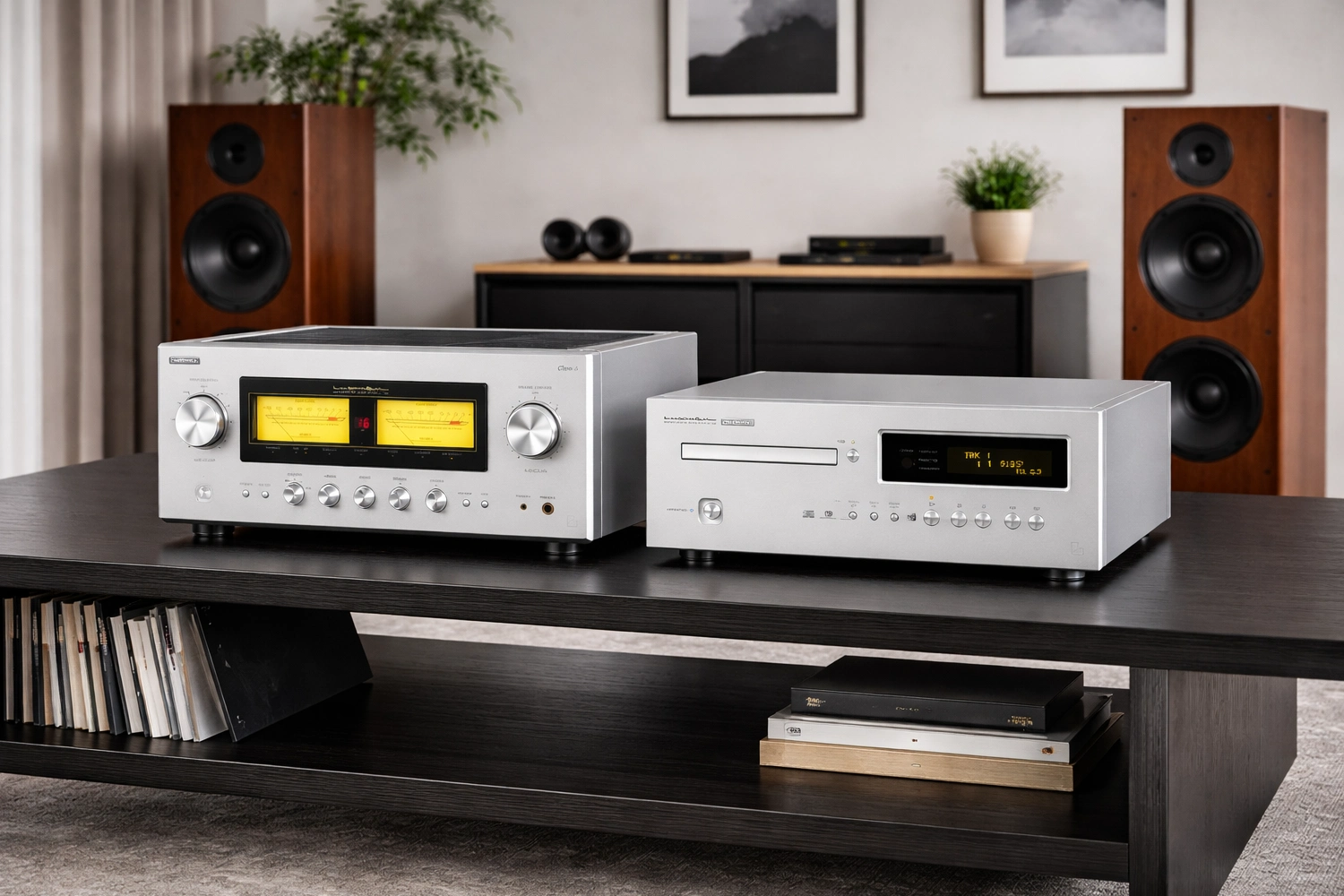
Luxman is celebrating its centennial and entering its second century. To celebrate, the company has unveiled two new flagship components designed to encapsulate a century of analog and digital engineering in a modern, benchmark pair. The new D-100c (SA)CD player and L-100c integrated amplifier form the heart of Luxman's 100th Centennial Series, celebrating its 1925 origins while reaffirming its longstanding commitment to refinement over innovation.
Luxman Centennial Series
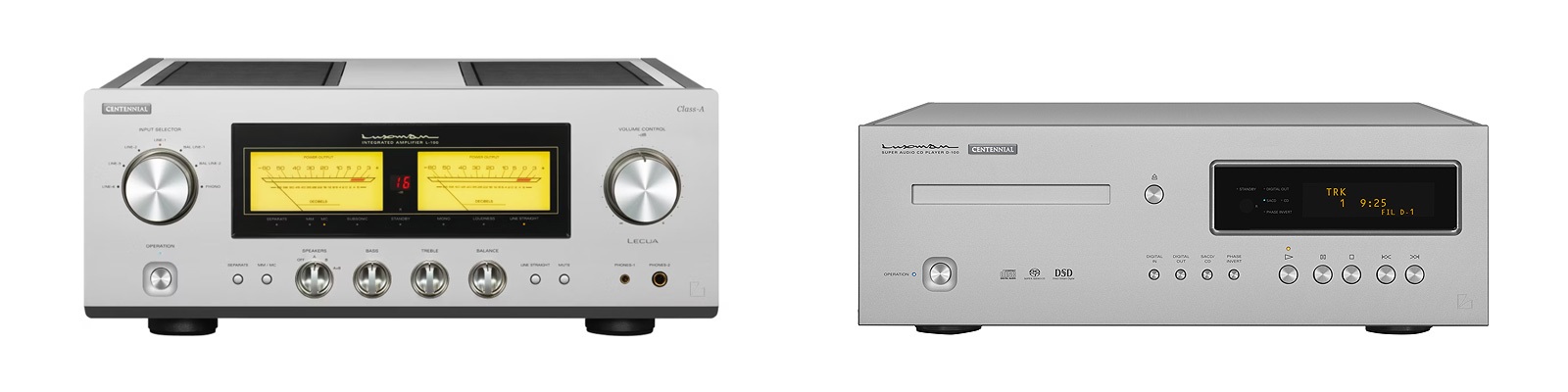
Rather than producing limited editions or cosmetic tributes, Luxman's Centennial approach continues a theme established last year with the launch of the Black Centennial Edition . The theme, in so many words, is “heritage reflected in technical priorities rather than mere nostalgia.” The D-100c and L-100c are positioned as full-fledged production components, specifically aimed at high-end stereo systems, and will soon be available in premium specialty stores. Luxman previously released the P-100c headphone amplifier in the same tradition .
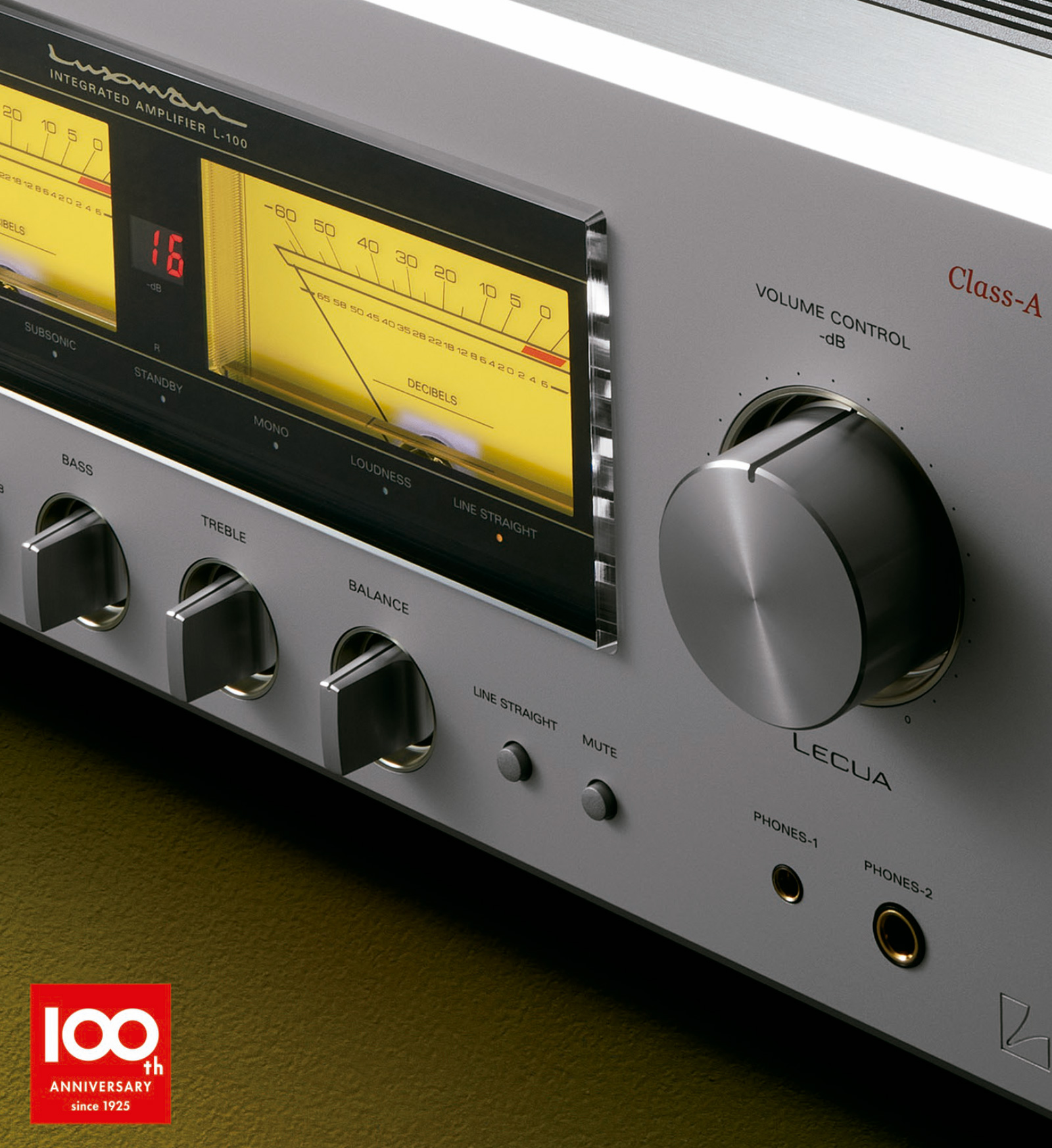
Luxman L-100C: integrated amplifier operating in class A
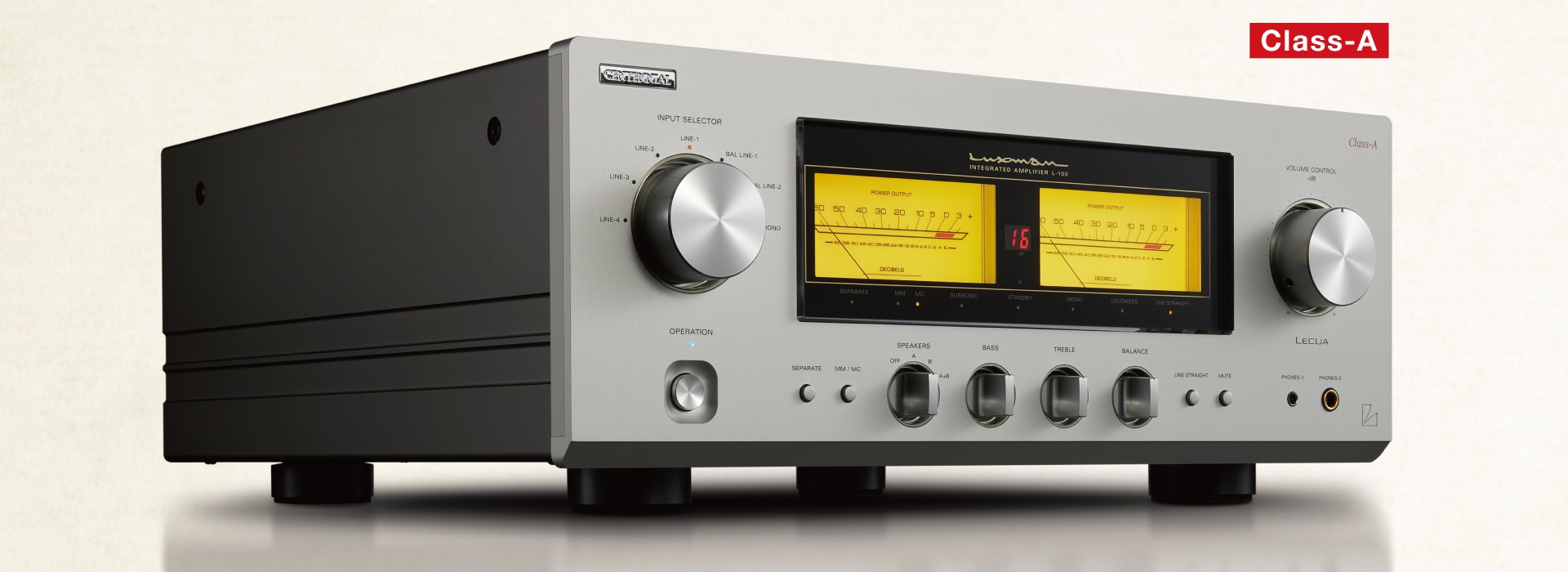
At 20 watts per channel into eight ohms (40 watts into four ohms), the figures may seem modest on paper, but the intention is well-considered. Luxman appears to have prioritized clean operation over maximum power, with every watt delivered continuously in Class A operation. The output stage uses a triple-parallel Darlington push-pull configuration, supported by a generously sized power supply with an oversized transformer and large smoothing capacitors. While 20 watts may not seem like much, it is Class A power, and with reasonably sensitive speakers, it can easily fill a listening room.
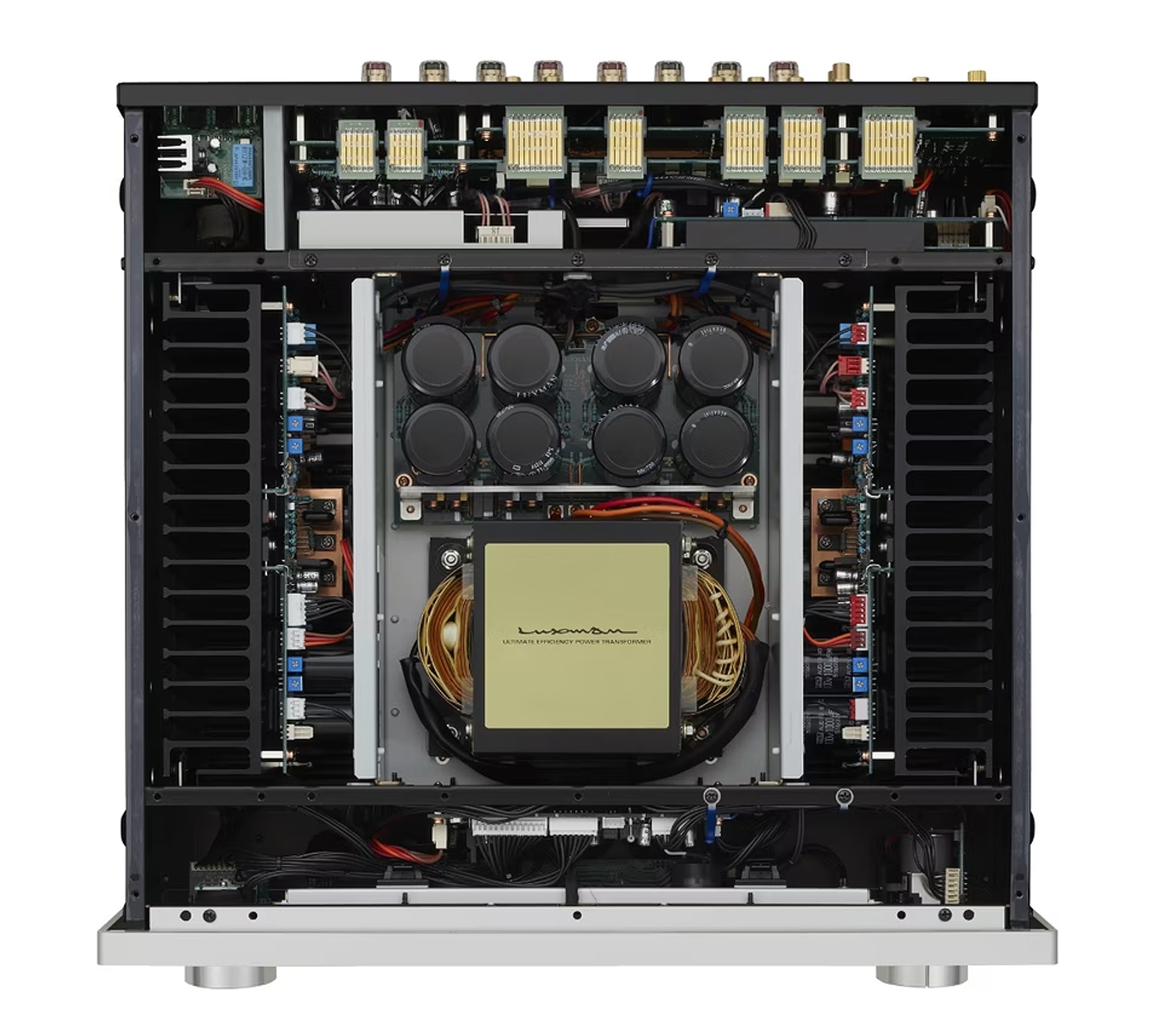
A closer look at the L-100c's circuitry reveals version 1.1 of Luxman's LIFES (Luxman Integrated Feedback Engine System), itself an evolution of the company's long-established proprietary ODNF (Only Distortion Negative Feedback) architecture. By connecting multiple FET semiconductors in parallel at the input of the error detection circuit, Luxman claims lower distortion and improved linearity while retaining its signature sonic richness.
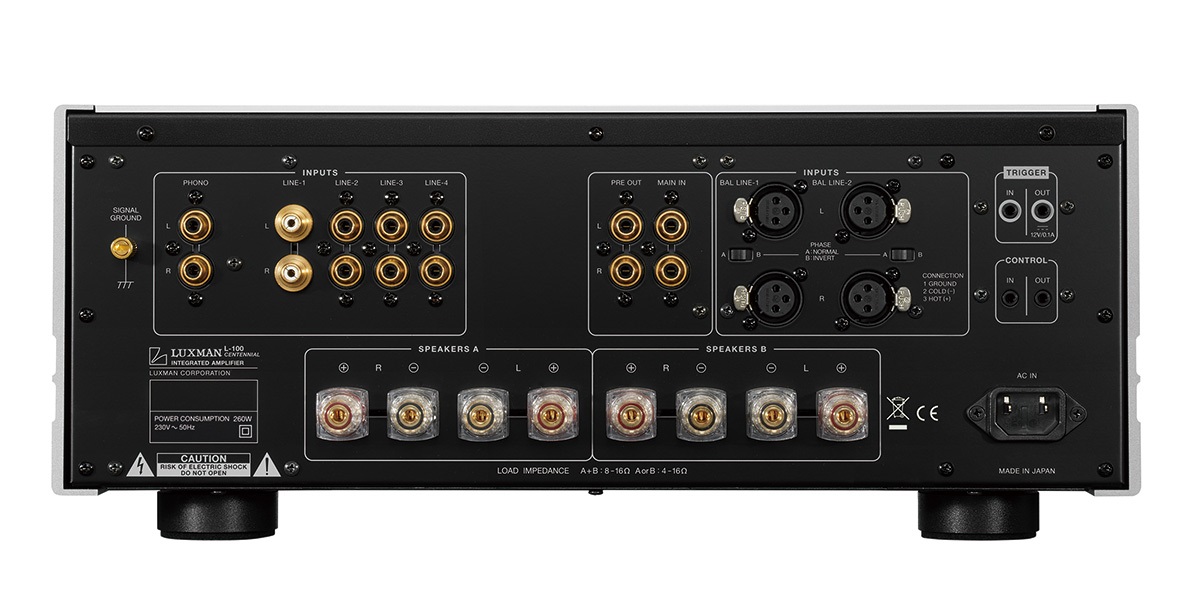
Volume control is handled by the latest generation LECUA (Luxman Electronically Controlled Ultimate Attenuator), with 88 individual steps. Connectivity includes balanced and unbalanced inputs, MM/MC phono support, pre-outs, dual speaker jacks, and both balanced and unbalanced headphone outputs.
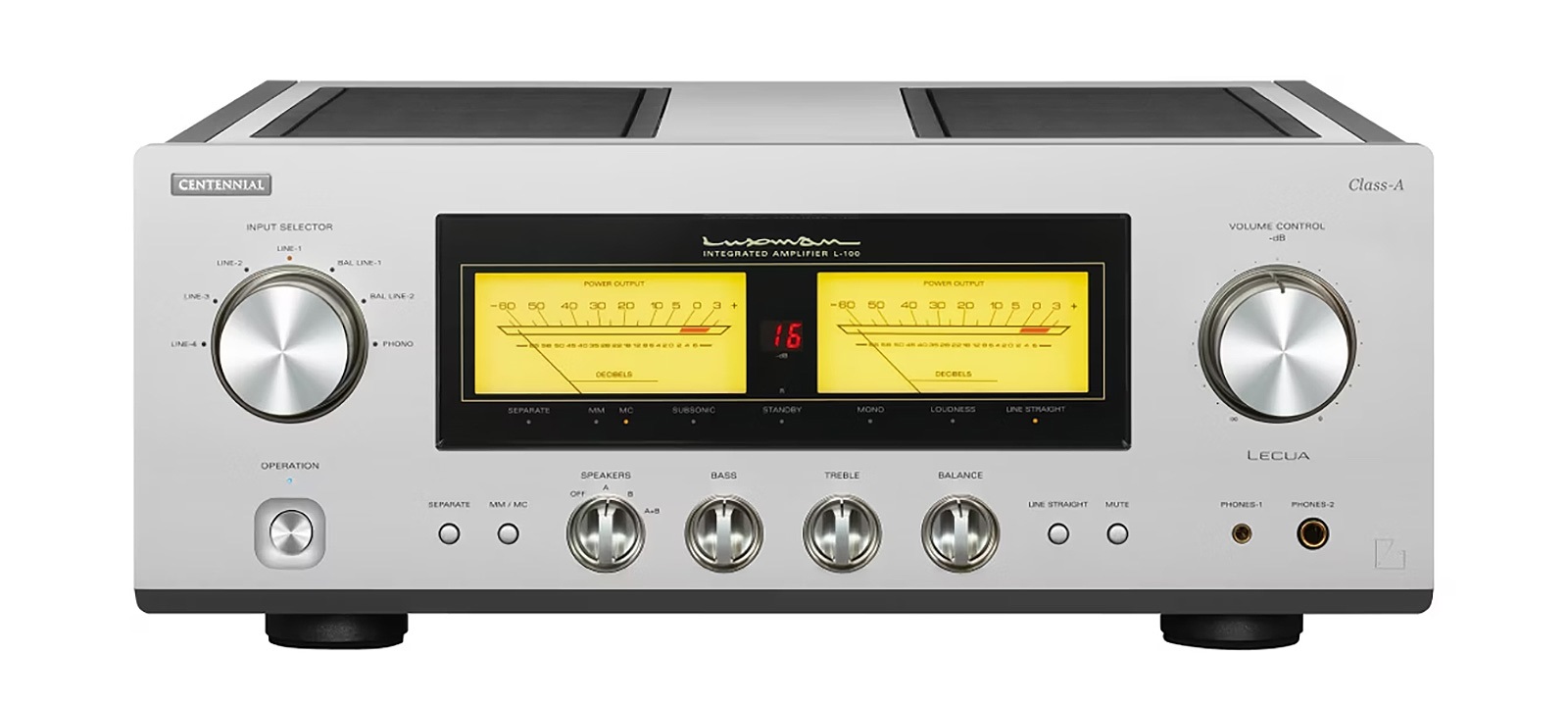
The L-100c's appearance is unmistakably in keeping with Luxman's tradition. The dual illuminated VU meters, brushed aluminum front panel, and beautifully designed cabinet are instantly recognizable, yet the design remains contemporary rather than retro. Weighing in at 25.4 kilograms, it also has the physical presence (and weight!) you'd expect from a flagship Class A amplifier.
Luxman D-100c: (SA)CD player: high-level drive and DA conversion
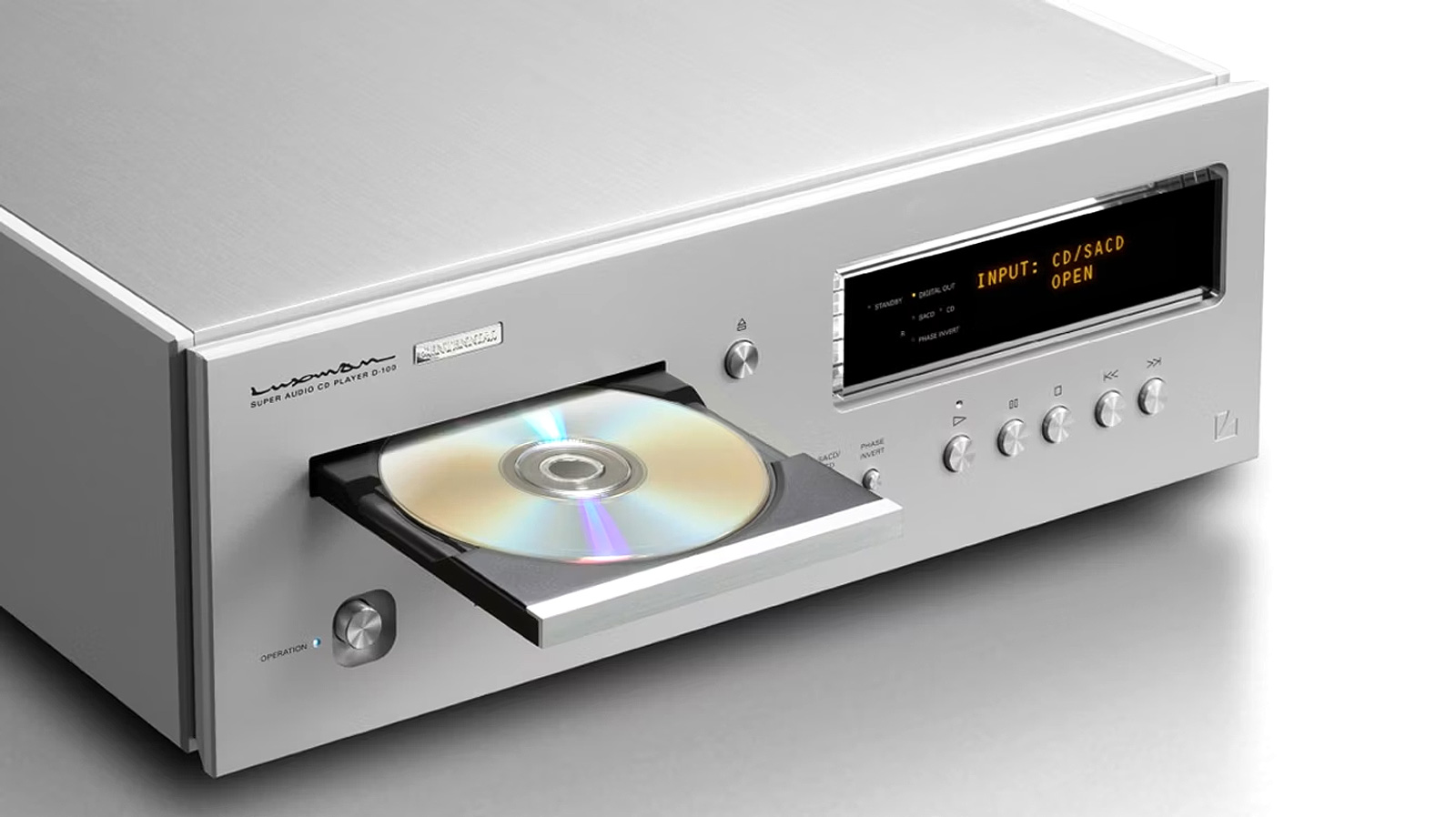
If the L-100c is the system's analog anchor, the D-100c (SA)CD player is its digital counterpart, according to the designers. The new model, which replaces the D-10X, is a completely revised version of Luxman's CD playback platform and not a simple upgrade of a previous generation.
At the heart of the redesign is Luxman’s proprietary LxDTM-i (SA)CD mechanism, or simply “Disc Transport Mechanism – improved”, which is fully integrated into the main chassis and reinforced with thick aluminium side frames, a steel top plate and an aluminium base for improved rigidity and vibration damping.
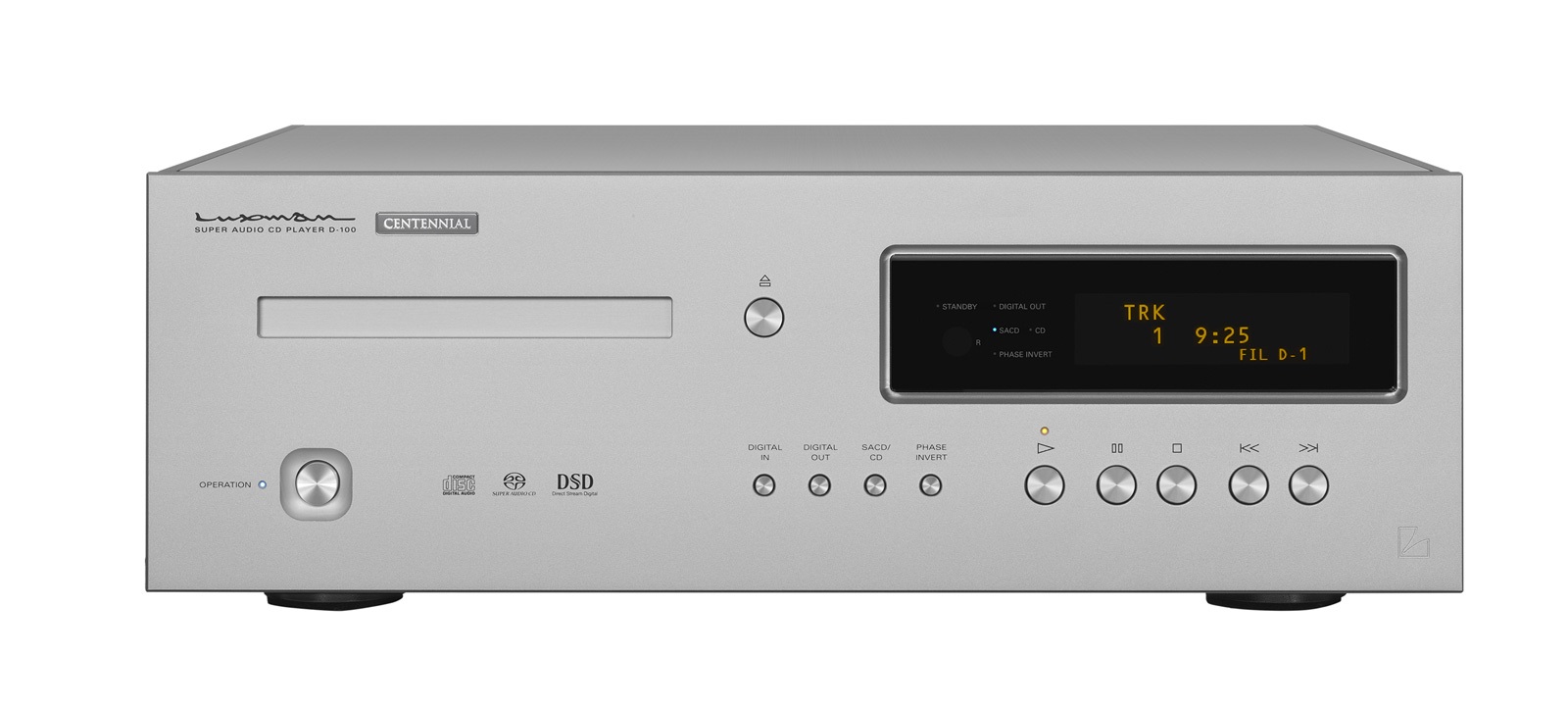
Digital conversion is handled by ROHM's flagship BD34302EKV DAC chips, mounted in a dual-mono configuration. The D-100c supports high-resolution PCM up to 32-bit/768 kHz and DSD up to 22.5 MHz (DSD512) via USB, as well as SACD and CD playback. The company also claims to have paid close attention to clock synchronization and noise reduction, using a large quartz oscillator and ultra-low phase noise circuitry to stabilize timing for both disc and file playback.
As with the amplifier, the analog output stage uses the latest LIFES 1.1 circuit, configured as a fully balanced system, and provides both RCA and XLR outputs. A large monochrome OLED display replaces the fluorescent panel of previous models. At the same time, the cast iron isolation feet emphasize the company's continued focus on mechanical stability as a contribution to sound quality.
 In short, the D-100c and L-100c are a well-considered duo in honor of the centenary, with Luxman emphasizing control, consistency, and long-term relevance over feature overload.
The devices are expected to be available between March and May 2026.



Share your thoughts on this product
Do you own this product or maybe have questions about it? Feel free to share your comments below.