
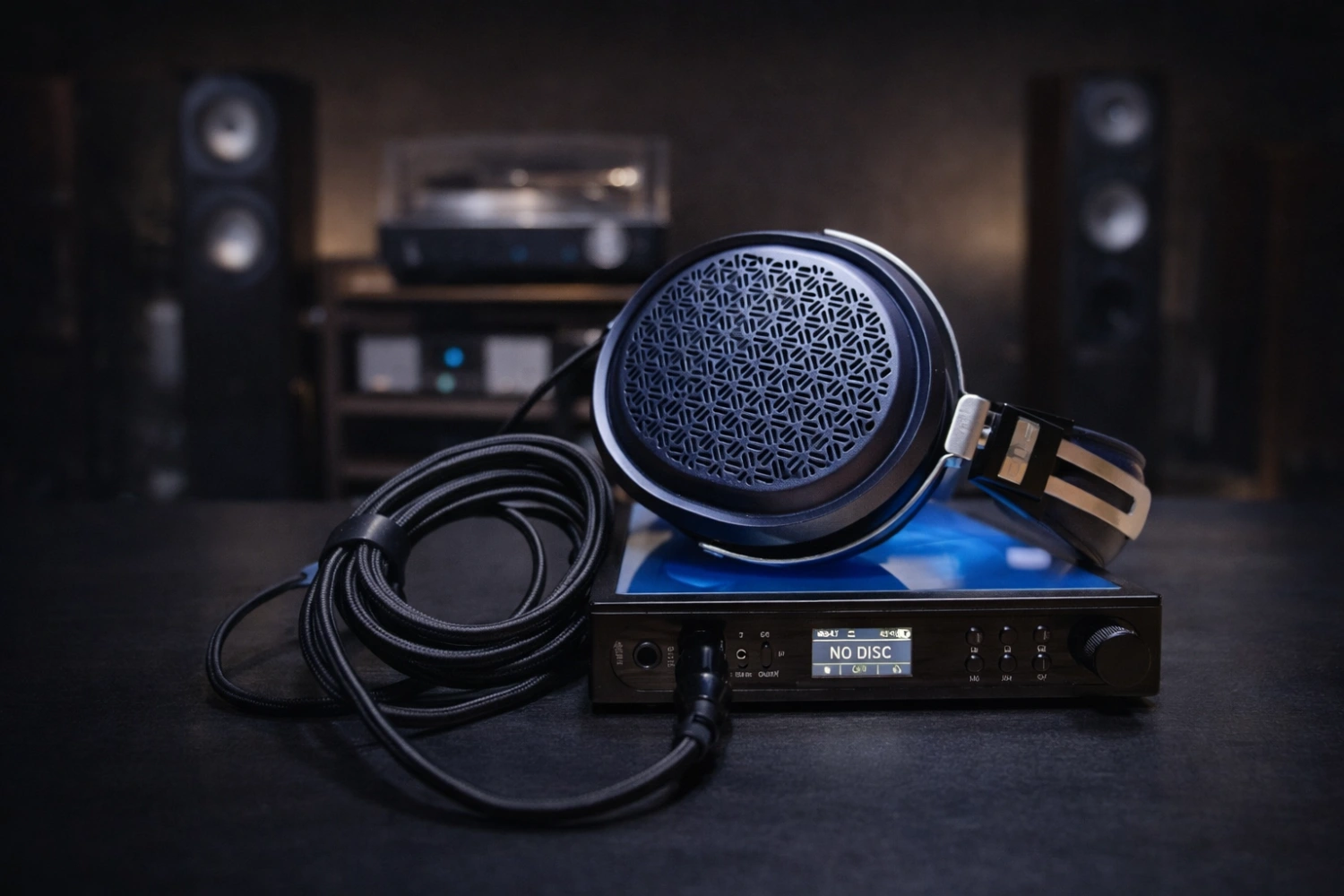
FiiO’s growing fascination with retro-inspired audio is starting to feel less like a design trend and more like a genuine philosophy. While most brands continue to push streaming and wireless convenience, FiiO is doing something far more interesting—bringing physical media back into focus, but with modern engineering underneath.
The DM15 R2R is perhaps the clearest expression of that idea so far.
Following earlier releases like the DM13, FiiO now takes a more ambitious step forward with a CD player that isn’t just about nostalgia, but about sound quality and versatility. The inclusion of an R2R DAC alone signals that this is not just a lifestyle product—it’s aimed squarely at listeners who care about how music feels, not just how it measures.
At its core, the DM15 is a hybrid device. It plays CDs, works as a USB DAC, functions as a headphone amplifier, and even supports Bluetooth transmission. It’s a modern interpretation of what a CD player can be, rather than a simple throwback.
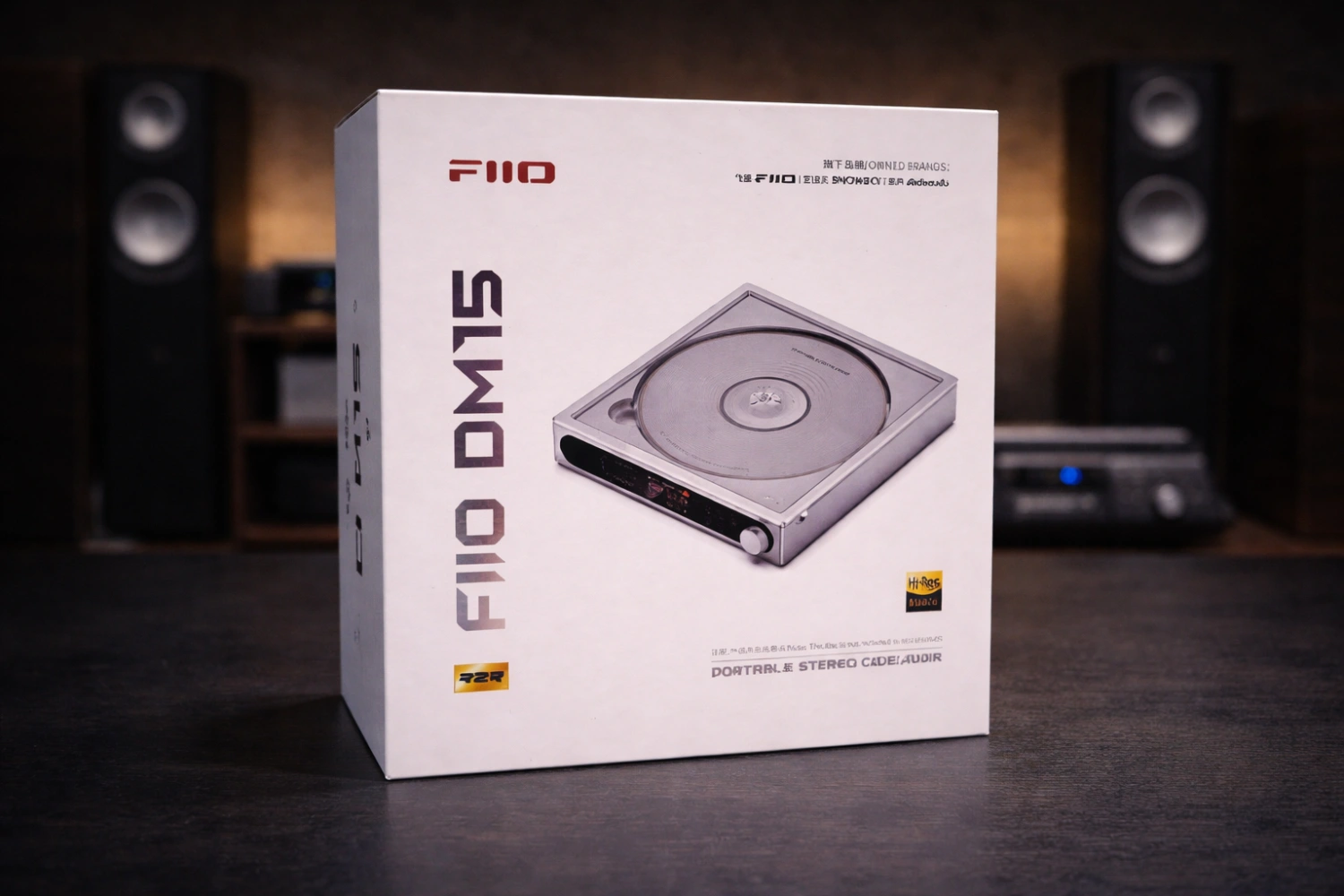
The FiiO DM15 R2R brings modern digital precision to a classic CD listening experience.
Design & Everyday Use
Visually, the design will feel familiar if you’ve seen the DM13, but there are subtle and meaningful refinements. The transparent lid remains a defining feature, now paired with a magnetic mechanism that feels far more refined in daily use. Opening the player has a satisfying, almost tactile quality that fits perfectly with the retro theme. It’s a small detail, but one that reinforces the idea that this is a product meant to be interacted with, not just used.
The front panel, however, is where FiiO has made its biggest statement—and also where opinions may divide. A collection of small physical buttons and a multifunction rotary wheel give the player a distinctly analog feel, but they also introduce a level of complexity. The buttons are tiny, the screen is noticeably smaller than before, and usability isn’t always as intuitive as the design might suggest.
In practice, the included remote control becomes an essential part of the experience. With it, the DM15 transforms into something much more comfortable to live with, especially in a desktop setup. Without it, the interface can feel slightly cramped and overly intricate.
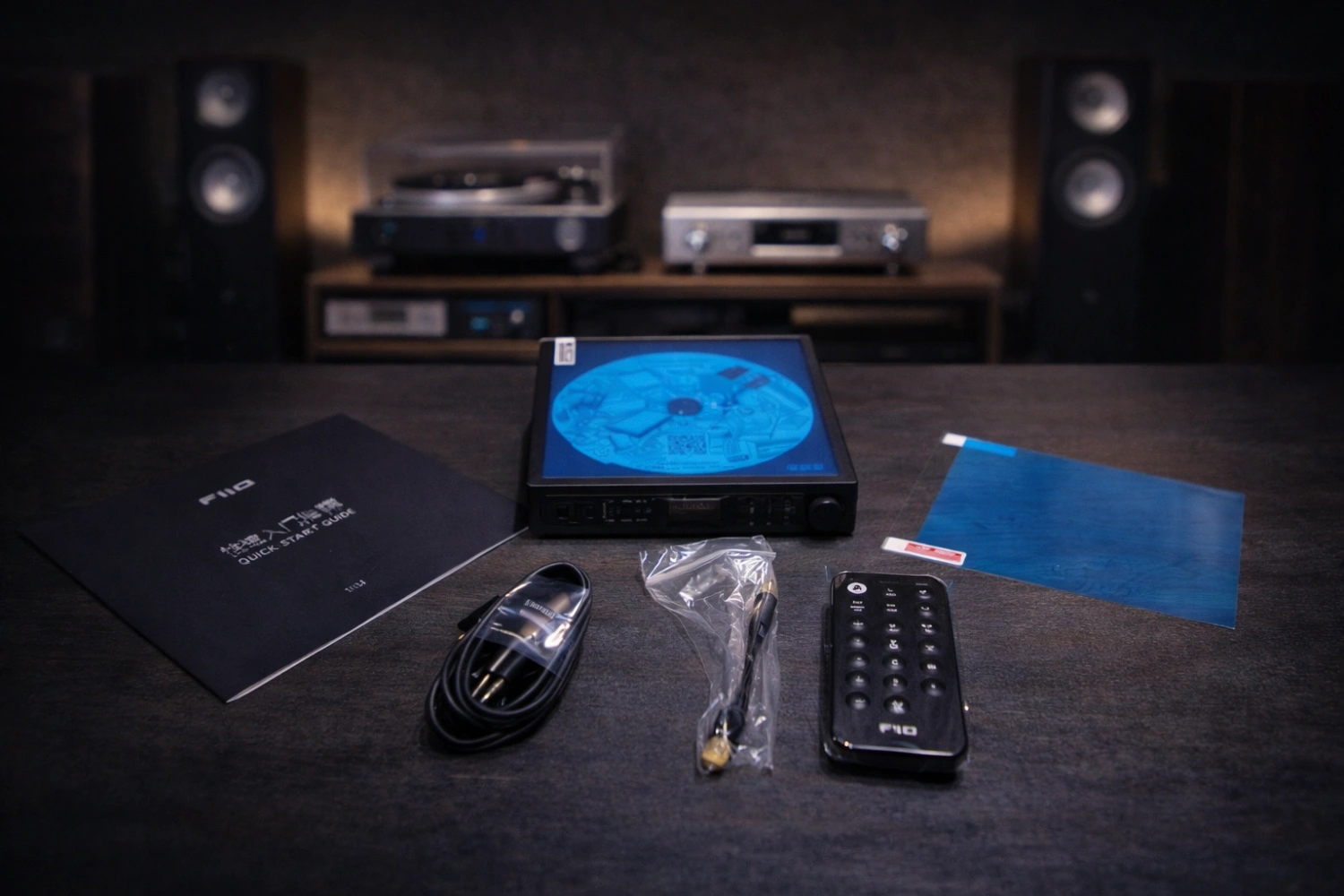
The DM15 R2R kit has expanded. Now, in addition to the USB A to USB C cable, 3.5 mm to Coaxial cable and four additional anti-slip rubber feet, the kit includes a player control panel and a protective film for the transparent part of the player cover.
Sound Performance
Once the music starts playing, most of the usability concerns quickly fade.
The DM15 R2R delivers a sound that feels deliberately tuned for musicality rather than analysis. There is a natural sense of flow to the presentation, a cohesiveness that makes it easy to forget about the device entirely and focus on the music. This is not a cold or clinical player—it leans into warmth and realism, but without sacrificing clarity.
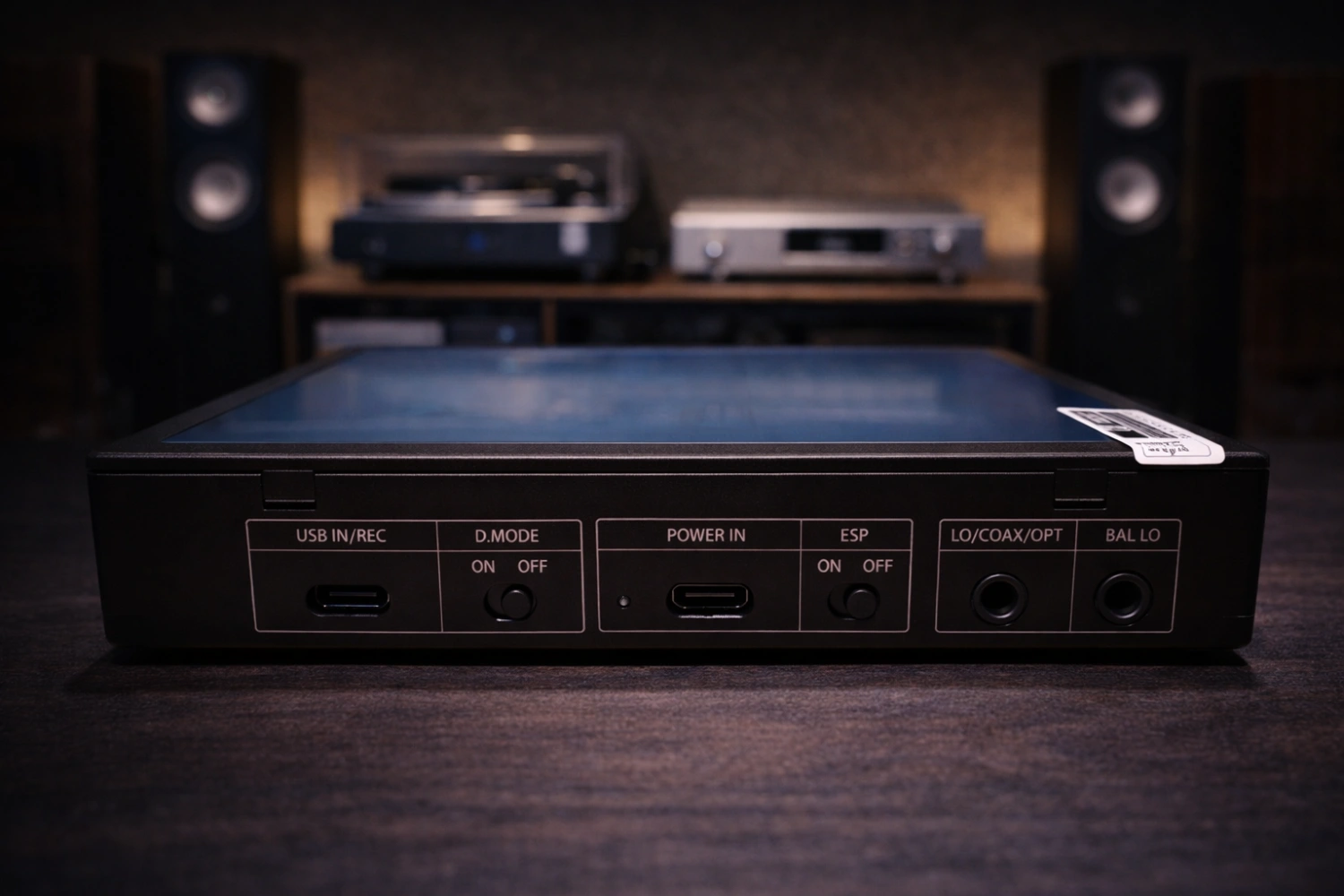
Retro design meets contemporary engineering in FiiO’s most ambitious portable CD player yet.
The bass is controlled and weighty, providing a solid foundation without ever becoming dominant. It doesn’t chase impact for its own sake, but instead adds body and presence to the overall sound. There is a sense of restraint here that works in the player’s favor, allowing the low end to support rather than overwhelm.
The midrange is where the DM15 truly distinguishes itself. Vocals and instruments come through with a convincing sense of texture and realism, neither pushed forward nor recessed. There is a richness to the tone that feels organic, almost tactile, as if the music has physical shape. It avoids the dryness that can sometimes plague more analytical designs, while still retaining enough detail to keep things engaging.
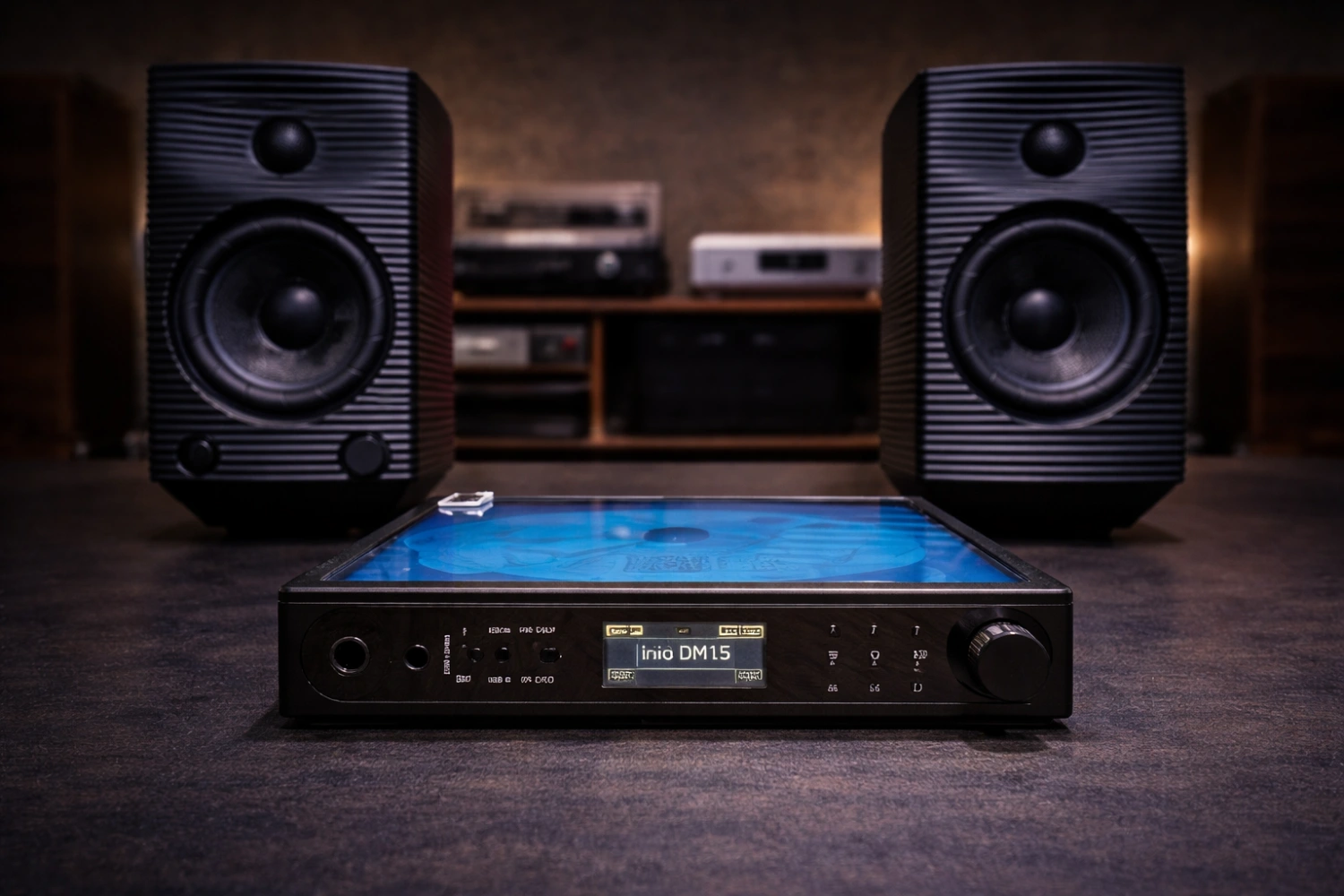
The transparent lid reveals more than just a disc—it highlights the DM15’s unique identity.
Treble is handled with equal care. It is smooth and composed, avoiding harshness or exaggerated brightness. There is sufficient air and separation to maintain clarity, but the overall presentation remains relaxed and listenable over long sessions. This is not a player that tries to impress in the first five minutes—it reveals its strengths over time.
DM15 vs DM13
Compared to the DM13, the difference is not subtle. The earlier model presents music with a sharper, more analytical edge, which can initially feel more detailed. But over time, it can also come across as slightly synthetic.
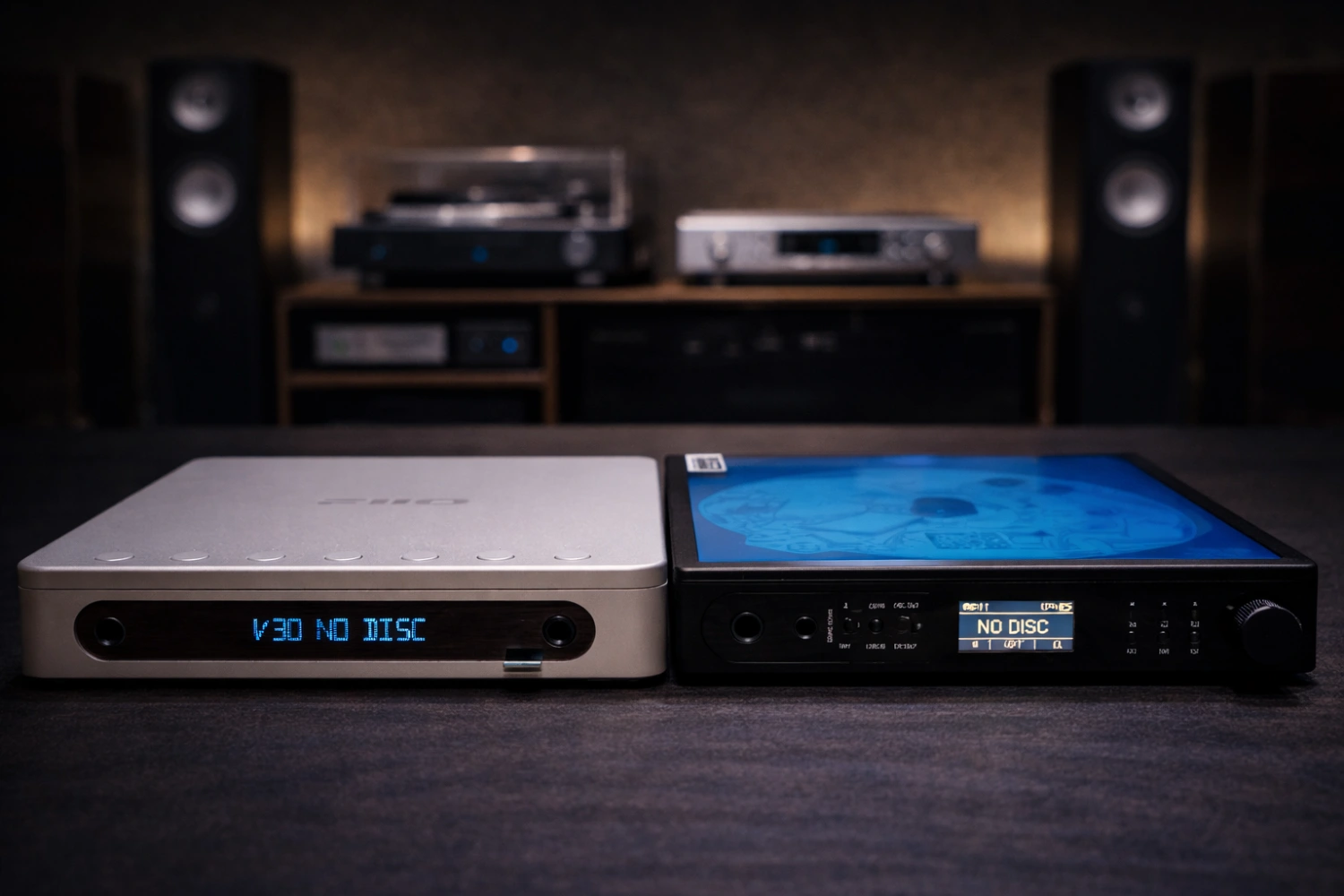
Side-by-side with the DM13, the DM15 R2R clearly signals a step forward in both design and sound.
The DM15, in contrast, feels more grounded. There is greater depth, more convincing layering, and a stronger sense of space between instruments. It doesn’t just present music—it gives it physical presence.
It simply sounds more real.
Conclusion
What makes the DM15 particularly compelling is how it manages to bridge two worlds. It embraces the ritual of physical media—the act of placing a CD, opening the lid, engaging with the device—while also functioning as a modern DAC and amplifier. It doesn’t force you to choose between nostalgia and convenience; it quietly offers both.
Of course, it isn’t perfect. The ergonomics can feel compromised, especially if you intend to use it on the move, and the interface takes some getting used to. But these are ultimately secondary concerns in a product that is clearly designed with sound and versatility as its primary focus.
The FiiO DM15 R2R is not a mass-market device, and it doesn’t try to be. It exists in a niche that is slowly growing again—a space where physical media, thoughtful design, and musical sound still matter.
For those who understand that appeal, it’s a remarkably satisfying piece of equipment.


Share your thoughts on this product
Do you own this product or maybe have questions about it? Feel free to share your comments below.